
Jerónimos Monastery South Portal: A Manueline Masterpiece
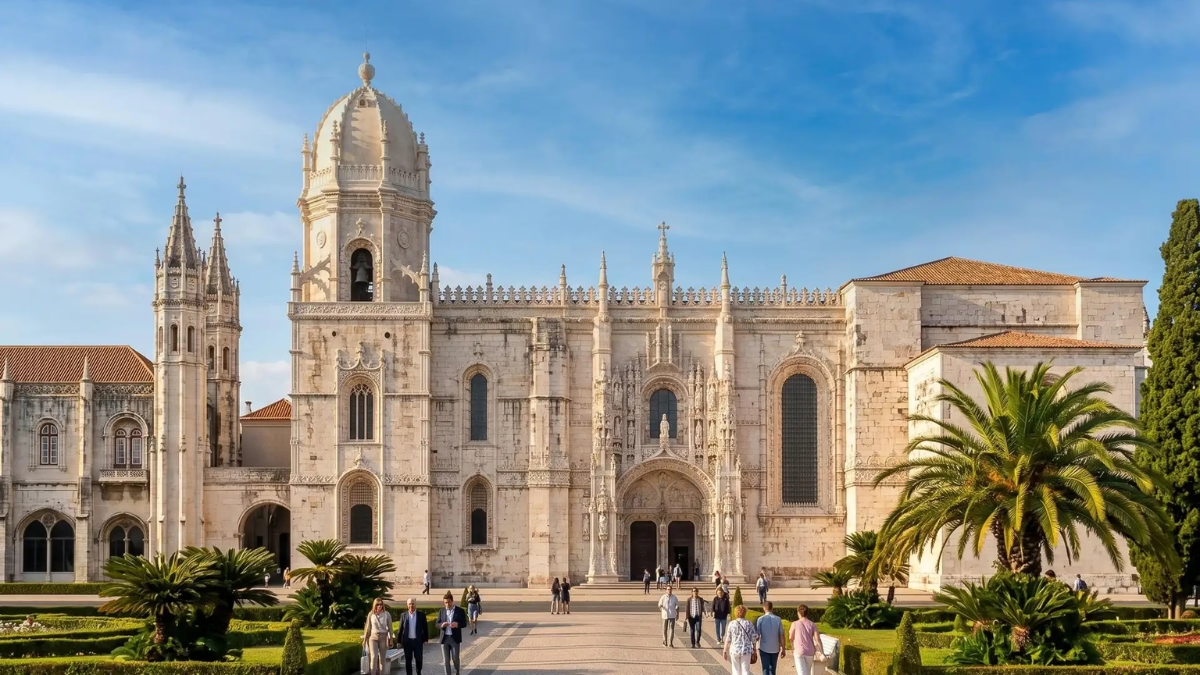
The South Portal is the towering, richly carved gateway on the church’s river-facing side, designed by João de Castilho and finished around 1517. It is layered with statues of Henry the Navigator, the Virgin of Belém, apostles, prophets and angels, all wrapped in dense Manueline canopy work. It served as the monastery’s ceremonial entrance rather than the door ordinary visitors use, and it is widely considered more a work of sculpture than of architecture.
Most people who walk into Jerónimos Monastery never look up at its finest doorway, because the ticketed entrance and the free church entrance both sit elsewhere on the building. The South Portal faces the Tagus, on the side of the church nearest the river, and it is the single most elaborate piece of stone carving on the entire complex — more so, many architectural historians argue, than anything inside the cloisters.
This guide walks through what the South Portal actually shows, who carved it, why it isn’t the door you’ll use on a normal visit, and where to stand for the best photograph.
A Grand Doorway Facing the River
The South Portal was built under João de Castilho, who took over the monastery’s construction from the original architect, Diogo de Boitaca, and pushed the Manueline style toward its most theatrical extreme. Rather than a modest church door, Castilho designed a portal roughly 32 meters (about 105 feet) high, subdivided into tiers of niches, canopies and pinnacles that climb almost the full height of the church’s south wall. It was carved mostly in the 1510s, decades into a construction project that, as our history of Jerónimos explains, ran for roughly a century and was funded by wealth pouring in from the maritime spice trade.
Seen from the garden or the riverside plaza, the portal reads less like an entrance and more like a freestanding sculpted screen that happens to have a door at its base. That impression is intentional — the goal was to announce Manuel I’s ambitions in stone before a visitor ever set foot inside.
Tiers of Saints, Angels and a Navigator
The South Portal is organized in layered registers of statuary: apostles and prophets fill the lower niches, angels and further figures occupy the tiers above, and the whole composition is bound together by dense canopy work, pinnacles and tracery typical of the Manueline style.
Climb the portal visually from the bottom and the sculptural program unfolds in tiers. The lower registers hold rows of apostles and Old Testament prophets, each set into its own carved canopy like a tiny stone chapel. Above them, angels and additional figures continue the vertical rhythm, and the whole surface is knitted together with the twisted rope-like moldings, maritime motifs and dense foliate carving that define Manueline decoration. Very little flat wall is left visible; nearly every surface carries some form of relief.
At the center of the composition, on the pillar (trumeau) that divides the doorway, stands a statue of Henry the Navigator — the patron of Portugal’s early voyages of exploration, whose presence here links the monastery directly to the age of discovery it was built to commemorate. Above the door, a statue of the Virgin of Belém, to whom the church is dedicated, holds a central place in the upper register, flanked by further saints and angels.
Armillary Spheres and Royal Heraldry
Woven among the figures are the recurring emblems of Manuel I’s reign: armillary spheres, the navigational instrument that became the king’s personal symbol and a shorthand for Portugal’s overseas ambitions, and carved royal coats of arms asserting the crown’s sponsorship of the project. These aren’t decorative afterthoughts — they’re the same visual language used across the monastery’s cloisters and the church interior, tying the South Portal to the building’s broader theme of maritime power blessed by divine favor.
More Sculpture Than Doorway
Look at the South Portal for more than a minute and the door itself starts to feel almost incidental. The scale of the statuary, the depth of the relief carving, and the sheer density of ornament mean the portal functions first as a sculptural monument and only second as a point of entry. Architectural historians often describe it this way: Castilho used the doorway as a pretext for a vertical gallery of stone figures, in the same way a triumphal arch uses a passageway as an excuse for commemorative relief. It’s worth remembering, too, that Portugal’s Manueline period overlapped with intense Renaissance and late-Gothic sculptural ambition across Europe — the South Portal sits at that crossing point, gothic in structure but almost Renaissance in its narrative ambition.
A Ceremonial Gateway, Not the Visitor Entrance
The South Portal is not where visitors enter today. It served historically as a ceremonial doorway on the church’s river side, while the free church and the ticketed cloisters each have their own separate, more modest entrances used for day-to-day visits.
It’s easy to assume the most spectacular door on the building is the one you’ll walk through, but that isn’t the case here. Access to the ticketed cloisters and the free church of Santa Maria de Belém runs through separate, plainer entrances elsewhere on the complex. The South Portal was built for ceremony — the kind of grand civic or royal occasion where a procession would pass through it — rather than for the steady flow of everyday visitors. If you’re planning a visit and need practical details on tickets and timing, our guide to the Jerónimos entrance ticket covers where the actual visitor line forms.
Best Angle and Light for Photos
The South Portal faces roughly south toward the Tagus, which makes morning the most reliable time to photograph it: the sun sits at a more favorable angle and the deep relief carving throws shadows that pick out individual figures rather than flattening the whole facade into glare. Midday sun tends to wash out the fine detail in the upper tiers, so if photography is a priority, come early.
For composition, stand back in the garden area facing the church rather than pressing close to the wall — the portal is tall enough that you need real distance to fit the full tower of statuary in one frame, and a slight side angle helps separate the tiers of niches from one another. Our dedicated guide to photo spots around the monastery has more on timing your visit around the light across the whole site, not just the portal.
Why the South Portal Defines Manueline Ambition
If the cloisters show Manueline style at its most refined, the South Portal shows it at its most unrestrained. Every element — the armillary spheres, the royal arms, the navigator on the pillar, the crowded tiers of saints — points back to the same idea: that Manuel I’s Portugal, flush with money from the spice trade, wanted its architecture to declare a newly global ambition as loudly as its ships did. It’s a fitting complement to the church of Santa Maria de Belém it announces, and arguably the clearest single statement of intent on the whole monastery.
Frequently Asked Questions
What is the South Portal of Jerónimos Monastery?
It’s the tall, heavily sculpted doorway on the south side of the church, facing the Tagus river. Designed by João de Castilho and completed in the early 16th century, it’s covered in tiers of statues, canopies and Manueline ornament and is often considered the finest single piece of carving at the monastery.
Who designed the South Portal?
João de Castilho, the architect who took over construction from Diogo de Boitaca and pushed the building’s Manueline detailing to its most elaborate. Castilho was responsible for much of the monastery’s later, more ornate work, including the South Portal and the upper cloister galleries.
Can visitors enter Jerónimos Monastery through the South Portal?
No. The South Portal was a ceremonial entrance, not a working visitor door. Today’s visitors use separate entrances for the free church and the ticketed cloisters, both more modest in scale than the South Portal itself.
Who is the figure on the South Portal’s central pillar?
The statue on the trumeau, the pillar dividing the doorway, depicts Henry the Navigator, the patron associated with Portugal’s early voyages of exploration. His placement at the center of the portal links the monastery to the maritime achievements it was built to commemorate.
What do the armillary spheres on the portal represent?
The armillary sphere, a navigational instrument, was the personal emblem of King Manuel I, and it appears repeatedly across the South Portal and elsewhere at Jerónimos. Paired with royal coats of arms, it asserts the crown’s sponsorship of the monastery and its ties to overseas exploration.
Why is the South Portal considered more sculpture than architecture?
The scale and density of the carved figures, canopies and ornament are so pronounced that the doorway itself feels secondary to the statuary surrounding it. Many historians treat it as a sculptural program that happens to frame a door, rather than a door decorated with sculpture.
What’s the best time to photograph the South Portal?
Morning light generally works best, since the portal faces toward the river and the sun’s lower angle at that time picks out the depth of the relief carving. Midday sun tends to flatten the detail, especially in the upper tiers.
Is the South Portal part of the free church or the ticketed cloisters?
It belongs to the church of Santa Maria de Belém, which is free to enter through its own separate door. The South Portal itself, however, is viewed from outside rather than used as a way in, so it doesn’t require a ticket to see.
