
Is Jerónimos Monastery Wheelchair Accessible? A Full Guide
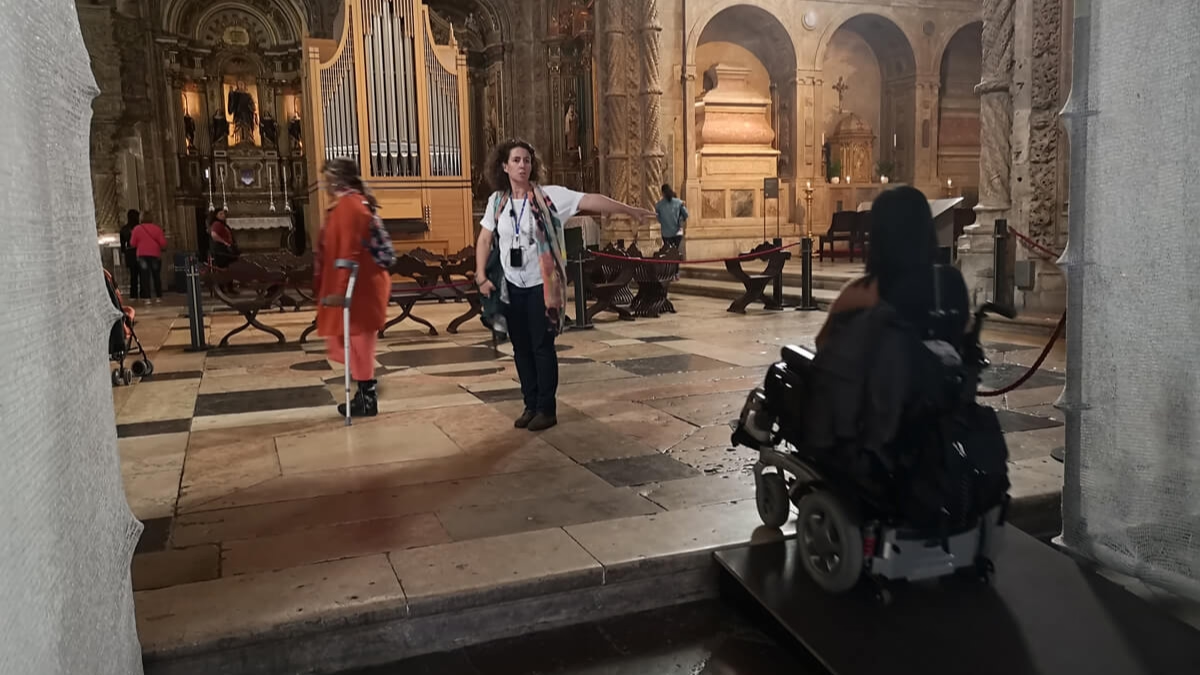
Jerónimos Monastery is partly wheelchair accessible. The free church of Santa Maria de Belém and the ground-floor (lower) cloister are step-free and manageable for wheelchair users, but the upper cloister gallery is reached only by a historic stone staircase, with no elevator built into the 16th-century structure. Approach streets in Belém are cobbled, so plan extra time and confirm current facilities with the monastery before you go.
Jerónimos Monastery is a working national monument carved from limestone five centuries ago, not a purpose-built modern museum, and its accessibility reflects that. Some parts are genuinely easy to visit with a wheelchair, walker, or stroller; one part is not, and it’s worth knowing which is which before you plan your day in Belém.
This guide covers what’s step-free, where the historic staircase limits access, how to get to Belém without cobbles and steps working against you, and where to double-check the details that can change.
What’s Accessible and What Isn’t
The church and the lower cloister are wheelchair accessible with step-free routes. The upper cloister gallery — the second-story walkway with views down into the courtyard — is reached only by a historic staircase, and there is historically no elevator. This is a genuine limitation, not an oversight, so factor it into your plans rather than assuming full access.
The church of Santa Maria de Belém, which is free to enter through its own doorway, is level and does not require navigating stairs to see the nave, the columns, or the tombs of Vasco da Gama and Luís de Camões near the entrance. The ticketed cloister — the two-story carved courtyard that is the highlight of a visit — is accessible on its lower (ground) level, where you can see the arcades, the refectory, and much of the carved stonework up close. The upper gallery, reached by the monastery’s original stairs, is where accessibility ends for wheelchair users; there is no ramp or lift built into the historic fabric to reach it.
Step-Free Entry Routes
Both the church and the ticketed entrance to the cloisters are reached from ground level at Praça do Império, without steps at the doorway itself. Once inside, the ground-floor cloister walkways are flat and wide enough for a wheelchair or a stroller, and the refectory and chapter house on the same level are reachable without stairs. Doorway thresholds inside a 500-year-old building are rarely perfectly flush, so expect small lips and uneven stone in places even on the accessible route, and allow a companion to help where needed.
The Upper Cloister: Historic Stairs, No Elevator
The upper gallery of the cloister is one of the most photographed parts of Jerónimos, but it’s reached solely by a stone staircase original to the building. There has historically been no elevator or stairlift serving this level, which means it is effectively off-limits to wheelchair users and difficult for many visitors with limited mobility. Given that heritage buildings do occasionally add or trial new access equipment, confirm the current situation directly with the monastery or on the official ticketing site before your visit, rather than assuming either way.
Accessible Toilets
Accessible toilets are provided within the ticketed monastery complex, though exact locations can shift as facilities are updated. If a step-free bathroom is essential to your visit, ask staff at the entrance when you arrive — they can point you to the nearest one and to any current shortcuts around less accessible areas.
Getting to Belém Without Steps
Belém is about 6 km west of central Lisbon, and how you get there matters if steps are a concern. Lisbon’s vintage tram 15E, a popular and scenic option, uses older rolling stock that isn’t reliably wheelchair accessible — some cars have steps at the doors. Buses 728, 714 and 727 run modern low-floor vehicles that are a more dependable choice for wheelchair users and anyone who prefers not to negotiate tram steps, and the suburban train to Belém station is another step-light option, though platform gaps vary. A taxi or rideshare directly to Praça do Império removes the transport question entirely and is often the least stressful choice if mobility is a concern.
The Cobbled Approach in Belém
Praça do Império and much of the surrounding Belém waterfront are paved in traditional Portuguese cobblestone (calçada portuguesa) — attractive, but uneven underfoot and genuinely harder going for wheelchairs, walkers, and stroller wheels than smooth pavement. Give yourself more time to cross the square than you would on flat ground, and be aware that after rain the stones can also be slippery.
Admission for Visitors with Disabilities and Companions
Portuguese cultural sites commonly offer free or reduced admission for visitors with disabilities and, in many cases, for an accompanying companion — but policies and documentation requirements vary and do change. Rather than assume a specific discount applies at Jerónimos, confirm current terms with the ticket office or the official monastery website before you buy, and bring any relevant disability documentation just in case it’s requested. The full ticket prices guide covers the standard adult, youth, senior and child rates if a specific concession isn’t available.
Sensory Considerations
Jerónimos can be a lot to take in sensorily. The stone interiors amplify sound, so the cloisters and church can feel loud and echoing when busy, especially with tour groups. Lighting is dim in parts of the church and lower cloister, natural light floods the courtyard on sunny days, and the building can feel notably cooler than the street outside. If the church is holding a service, expect organ music, incense, and a temporary pause in visitor movement through that space.
Advice for Wheelchair Users, Reduced Mobility, and Strollers
Focus your visit on the church and lower cloister, arrive with extra time for the cobbled approach, and travel by bus, train, or taxi rather than the historic tram if steps are a concern. Book a timed-entry ticket in advance so you aren’t standing in a long queue, and ask staff on arrival about the current state of toilets and any access points.
For wheelchair users, plan the visit around the church and the ground-floor cloister, and treat the upper gallery as unlikely to be reachable. For visitors with reduced mobility who can manage some stairs slowly, the upper cloister stairs are manageable with time and a handrail, but there’s no shortcut around them. For families with strollers, the same lower-level route works well, though the cobbled square outside is the bigger obstacle than anything inside; a carrier is a useful backup for very young children. In all cases, a pre-booked entrance ticket with a timed slot avoids a long standing queue, which can be the hardest part of the visit for anyone with limited stamina.
Confirming Current Accessibility Before You Go
Accessibility provisions at heritage sites can be updated — a new ramp added, a lift installed, opening hours adjusted for a quieter visit — faster than any guide can track. Before you travel, check the official Mosteiro dos Jerónimos website or call ahead to confirm current step-free routes, toilet locations, and any support available on the day. Doing this a few days ahead, rather than assuming this article is the last word, is the honest way to avoid a surprise at the door.
Frequently Asked Questions
Is Jerónimos Monastery wheelchair accessible?
Partly. The free church and the ground-floor cloister are step-free and manageable for wheelchair users. The upper cloister gallery is reached only by a historic staircase with no elevator, so it is not accessible to wheelchair users. Confirm current provisions with the monastery before you visit.
Can I see the cloisters if I use a wheelchair?
Yes, in part. The lower level of the cloister — including much of the carved stonework, the refectory, and the chapter house — is on flat ground and accessible. The upper gallery, reached by stairs, is not reachable by wheelchair under the historic building’s current layout.
Is there an elevator to the upper cloister?
Historically, no. The upper gallery is reached by the monastery’s original stone staircase, and there is no elevator built into the structure. Because access equipment can occasionally be added at heritage sites, it’s worth confirming the current situation directly with the monastery.
Are there accessible toilets at Jerónimos?
Accessible toilets are available within the ticketed complex, though exact locations can change as facilities are updated. Ask staff at the entrance when you arrive so they can direct you to the nearest one.
What’s the best way to reach Belém if I use a wheelchair?
Buses 728, 714 and 727 use modern low-floor vehicles and are more reliable than the historic tram 15E, which has steps on some cars. The suburban train to Belém station is another option, and a taxi or rideshare directly to Praça do Império avoids the transport question altogether.
Is the approach to the monastery step-free?
The entrances to both the church and the ticketed cloisters are at ground level with no steps at the door. However, Praça do Império and the surrounding streets are paved in traditional Portuguese cobblestone, which is uneven and can be slow going for wheelchairs, walkers, and strollers.
Is there a discount for visitors with disabilities?
Portuguese cultural sites often offer reduced or free admission for visitors with disabilities and sometimes a companion, but terms vary and can change. Confirm current policy and any documentation needed with the ticket office or official website before you buy.
Is Jerónimos Monastery suitable for strollers?
The church and lower cloister work well with a stroller on the same step-free route used by wheelchair users. The cobbled square outside the entrance is the main obstacle, so allow extra time crossing it, and consider a baby carrier as a backup.
