
Jerónimos Monastery Cloisters: The Complete Visitor Guide
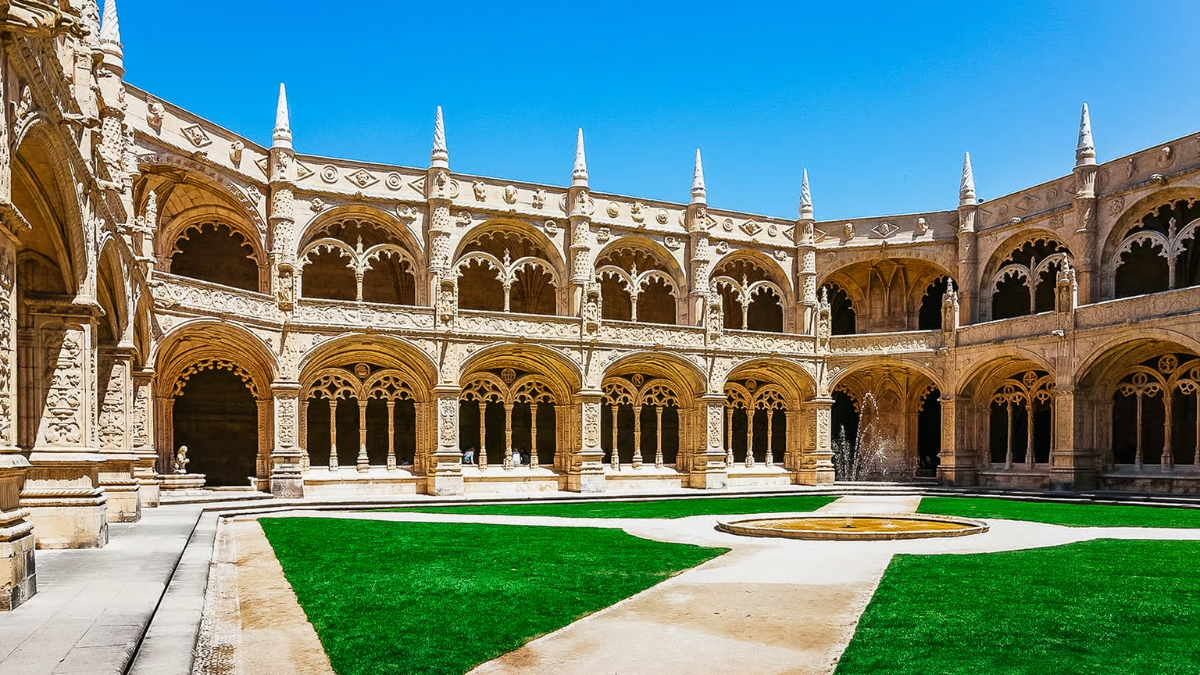
The cloisters are the ticketed heart of Jerónimos Monastery — a two-story square courtyard roughly 55 meters (180 feet) on each side, begun by Diogo de Boitaca and carried to completion by João de Castilho. Every arch is carved with Manueline motifs — twisted ropes, armillary spheres, coral-like tracery — blending Gothic structure with Renaissance restraint. Budget 40–60 minutes to walk both levels, see the Fernando Pessoa cenotaph, and glance into the refectory and chapter house.
If you buy one ticket in Belém, this is what it buys. The church of Santa Maria de Belém next door is free and often crowded with people passing through quickly, but the cloisters are the space where the monastery’s carvers, and its ticketed queue, both concentrate their effort. This guide walks through the layout, the carving, the notable tomb inside, and how to time your visit.
What the Cloisters Are
The cloisters are a two-story square courtyard, about 55 meters per side, wrapped by carved stone arcades on both levels. They were begun under royal architect Diogo de Boitaca around the start of construction in 1501 and substantially reworked and finished by João de Castilho, whose Manueline style dominates what you see today.
The layout is simple to picture: four covered walkways enclosing a garden square, repeated on an upper gallery above. What makes it remarkable isn’t the plan but the surface. Boitaca laid out the Gothic bones — pointed arches, ribbed vaulting — and Castilho then dressed nearly every surface in the ornament that gives Manueline architecture its name. The result reads as Gothic structure carrying Renaissance-era decoration, with a distinctly Portuguese, maritime-themed layer stitched through both.
Funding came from the pepper and spice trade that Manuel I’s voyages opened up, and the carvers had a long run — construction stretched across roughly a century — to keep adding detail. That’s part of why the cloisters reward slow looking rather than a quick lap.
The Carving: What to Look For
Look closely at the arcades and you’ll find the vocabulary of Manueline decoration repeated with variation at nearly every bay: twisted rope moldings that mimic ship’s rigging, armillary spheres (the navigational instrument that became Manuel I’s personal emblem), coral- and vegetal-looking tracery, small gargoyles at the roofline, and carved medallions set into the spandrels above the arches. Nothing is left plain. Column shafts, capitals, and the stone tracery infilling the arches all carry some version of these motifs, which is what distinguishes Manueline work from the plainer Gothic cloisters found elsewhere in Portugal.
The lower gallery, built first and closer to Boitaca’s original design, is slightly more restrained. The upper gallery, finished later under Castilho, is where the ornament gets busiest — a useful detail if you want to compare the two architects’ hands directly by walking one level and then the other.
For a closer look at the individual motifs and how they connect to Manuel I’s reign, see our guide to Manueline architecture at Jerónimos.
Upper vs. Lower Galleries
The lower gallery sits at garden level and gives the closest view of the carving; the upper gallery is reached by a historic stone staircase and offers an elevated view down into the courtyard and out toward the church tower. Both levels are included in the same ticket, and most visitors walk the full loop on each.
Access to the upper level is by a worn stone staircase original to the building, tucked into one corner of the cloister — narrow enough that it can back up briefly when tour groups pass. Once up top, the payoff is the view: you look down across the garden square, along the full run of arcading, and toward the church’s lantern tower rising behind it. It’s also usually a few degrees cooler in shade and a little less crowded than the ground floor, since not everyone climbs.
Walking both levels is where the 40–60 minute figure comes from. The ground floor alone can be seen in 15–20 minutes if you’re moving quickly, but the upper gallery, the different light at different times of day, and the side rooms opening off the lower walk all add time if you let them.
Best Times for Light, Quiet and Photos
Morning, soon after the 9:30 AM opening, is the most reliable window for both quiet and light — the sun angles into the east-facing arcades and tour groups haven’t arrived in force yet. Midday brings the most visitors and the flattest light. Late afternoon can be pleasant too, though the cloisters can feel more shadowed as the sun moves around the building. Whatever time you choose, a pre-booked timed entry slot avoids the on-the-day line, which can run past an hour in high season.
The Fernando Pessoa Cenotaph
Partway around the cloister sits a cenotaph — an empty, symbolic tomb rather than an actual burial place — for the poet Fernando Pessoa, one of Portugal’s most significant modern writers. His remains were moved here in 1985, decades after his death in 1928, as a form of national commemoration rather than a burial in the traditional monastic sense. It’s a modern addition to a five-centuries-old building, and it draws a steady trickle of visitors who come specifically to see it, distinct from the older royal tombs housed in the church next door.
For the church’s actual burials — Vasco da Gama, Luís de Camões, and the kings interred there — see our guide to the tombs at Jerónimos.
Monastic Life: Refectory and Chapter House
The cloister wasn’t only ornamental; it organized the daily life of the Hieronymite monks who lived here for centuries before the monastery’s religious community was dissolved in the 19th century. Two rooms open directly off the cloister walk: the refectory, where monks took meals in silence beneath more carved and tiled decoration, and the chapter house, used for community meetings and now also a resting place for notable Portuguese figures. Both are included in the same cloister ticket and are easy to miss if you don’t watch for the doorways along the lower gallery.
Practical Visit Tips
Your standard entrance ticket covers the cloisters in full — both galleries, the refectory, and the chapter house — and is the only part of the monastery that charges admission; the church of Santa Maria de Belém next door remains free with its own separate entrance. Plan on 40–60 minutes if you want to see both levels properly, longer if you like to photograph the carving in detail. Comfortable shoes help, since the stone floors and staircase are original and can be uneven. If you’re combining the visit with the church and the nearby tombs of Vasco da Gama and Camões, allow extra time beyond the cloister visit itself, and remember the whole site is closed on Mondays.
Frequently Asked Questions
What exactly do I see with a Jerónimos ticket?
The paid ticket admits you to the cloisters: the two-story carved courtyard, its upper and lower galleries, the former refectory, and the chapter house. The church of Santa Maria de Belém next door is free and does not require this ticket.
How big are the cloisters?
The cloister courtyard measures roughly 55 meters (about 180 feet) on each side, forming a square enclosed by covered arcades on two levels. It’s large enough that a full walk of both galleries takes most visitors well over half an hour.
Who designed the cloisters?
Diogo de Boitaca began the design around 1501, laying out the Gothic structure. João de Castilho took over construction and is responsible for most of the dense Manueline carving visitors see today, particularly on the upper gallery.
Can I access both levels of the cloister?
Yes. A historic stone staircase in one corner of the cloister leads up to the second-level gallery, and both floors are included in the same admission. The upper level also offers a wider view across the courtyard.
Is the Fernando Pessoa tomb a real burial site?
It’s a cenotaph, a symbolic memorial rather than his actual grave. Pessoa’s remains were moved to the cloister in 1985 as a national tribute, distinct from the historical royal and navigator tombs housed in the church.
How long should I spend in the cloisters?
Most visitors need 40 to 60 minutes to walk both galleries, view the carving, and step into the refectory and chapter house. Add time if you plan to photograph details or if the cloister is busy with tour groups.
Are the cloisters crowded?
They can be, especially midday and in high season, since this is the ticketed highlight nearly every visitor walks through. Arriving soon after the 9:30 AM opening, on a pre-booked timed slot, is the most reliable way to see it with fewer people around.
Do I need a guide to appreciate the carving?
Not strictly, but a guide or audio guide helps identify the Manueline symbols — ropes, armillary spheres, coral motifs — that repeat throughout the arcades and can otherwise blend together. Several guided options cover the cloisters alongside the rest of the monastery.
