
Jerónimos Monastery Dress Code: What to Wear & Tips to Know
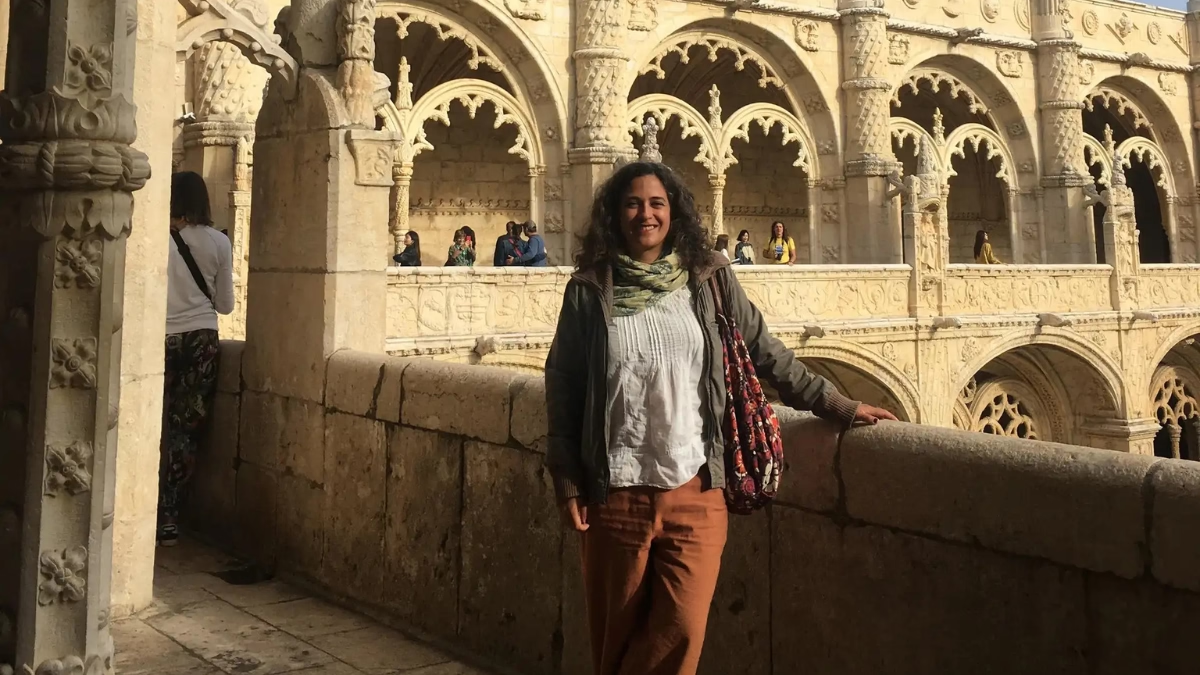
There’s no strictly enforced dress code for the ticketed cloisters, but Jerónimos is still an active church, so modest dress — shoulders and knees covered, hats off indoors — is expected and respectful, especially inside the church of Santa Maria de Belém. Beyond modesty, dress for comfort: flat, sturdy shoes for stone floors and stairs, and light layers since the cloisters are open-air and Lisbon summers run hot.
Jerónimos Monastery is two places in one: a UNESCO-listed monument that draws crowds with cameras, and the working church of Santa Maria de Belém, where Mass and other services are still held. That mix is why the question of what to wear comes up so often. Nobody will hand you a rulebook at the door, but a little consideration goes a long way in a building that’s still a place of worship for some visitors.
This guide covers what’s expected in the church versus the cloisters, what counts as respectful attire, and the practical side of dressing for a site with a lot of walking, stairs, and open-air courtyards.
Is There an Official Dress Code?
There is no strictly enforced dress code for the ticketed cloisters — staff aren’t checking hemlines at the entrance. The church of Santa Maria de Belém is a different matter: because it remains an active place of worship, modest, respectful dress is expected, and covering shoulders and knees is the standard courtesy at religious sites across Portugal.
Nobody is likely to turn you away from the cloisters for wearing shorts or a tank top on a hot Lisbon afternoon. The two-story carved courtyard, refectory, and chapter house are treated as a monument first, and there’s no posted checklist of banned clothing. That said, “no enforcement” isn’t the same as “anything goes.” Jerónimos hosts a steady flow of visitors of all backgrounds, including practicing Catholics who come specifically to pray in the church, so dressing with a bit of modesty in mind is simply good manners rather than a rule you’re breaking.
Dress Code Inside the Church of Santa Maria de Belém
Inside the church, cover your shoulders and knees, remove hats, and keep your voice down, especially if a service is underway. These are the same expectations you’d meet at any working Catholic church in Portugal, and they’re worth following here since the church still holds Mass.
The church of Santa Maria de Belém is free to enter and has its own queue, separate from the ticketed cloisters — and it’s also where the tombs of Vasco da Gama and Luís de Camões flank the entrance, with kings Manuel I and João III resting further inside. Because it’s an active church, the informal but widely observed norms apply:
- Cover your shoulders (a light shawl, scarf, or cardigan works well over a sleeveless top).
- Cover your knees — swap short shorts or mini skirts for something knee-length or longer.
- Take off hats and caps once you’re inside.
- Keep phones on silent and voices low, particularly if you arrive during or near a service.
- Avoid using the church as a photo backdrop for posed shots; quick, quiet photos of the architecture are generally fine, but be aware of others there to pray.
None of this requires special planning — a scarf tossed over bare shoulders or throwing on a light layer covers most situations. If a service happens to be underway when you arrive, it’s best to wait quietly at the back or come back a little later rather than walking through mid-Mass. Our guide to the opening hours has more on the church’s separate, shorter schedule.
Dress Code in the Cloisters
The cloisters don’t enforce a dress code, but they’re still part of a former monastery and a national monument, so respectful, reasonably modest clothing is appreciated. Comfort matters more here than modesty rules, since you’ll be on your feet on stone floors for an hour or more.
Once you’re through the ticket gate and into the cloisters, the atmosphere shifts from “place of worship” to “architectural landmark.” You’ll see visitors in shorts, sundresses, and sandals throughout the summer, and no one is stopping them at the door. Still, because the cloisters connect directly to the church and share the same Manueline stonework and monastic history, dressing with a touch of respect — rather than beachwear — fits the setting better. Think of it the same way you’d dress for a cathedral cloister or historic abbey anywhere in Europe: casual is fine, but very short shorts, swimwear, or bare midriffs stand out for the wrong reasons.
Dressing for Comfort: Shoes, Stairs, and Sun
Wear comfortable, closed or sturdy flat shoes — the cloister floors are worn stone, and there are stairs to the upper choir and around the courtyard. The cloisters are open-air, so bring a hat and water in summer and a light rain layer in the wetter months, and dress in layers since Lisbon’s weather can shift through the day.
The practical side of dressing for Jerónimos matters just as much as modesty:
- Footwear: The cloisters, refectory, and chapter house all involve worn stone floors, uneven thresholds, and stairs up to the choir gallery. Flat, closed or sturdy sandals with good grip beat flip-flops or high heels.
- Open-air courtyard: The famous two-story cloister is open to the sky in the center, so weather reaches you directly. A hat and sunscreen help on bright days; a compact umbrella or light rain jacket helps if showers roll in, which happens even in a generally dry climate.
- Lisbon summer heat: From June through September, midday temperatures in Belém can climb into the high 80s Fahrenheit, and there’s little shade while you queue outside. Light, breathable fabrics and a refillable water bottle make a real difference, especially if lines run long. Our guide to the best time to visit has more on avoiding the worst of the heat and crowds.
- Layers: Even in summer, the church interior and shaded cloister corners can feel noticeably cooler than the sun-baked plaza outside, so a light layer you can add or remove is useful year-round.
- Bags: A small daypack or crossbody bag is more practical than a large suitcase-style bag, since aisles and stairwells are narrow in places.
Booking a timed-entry entrance ticket in advance also cuts down the time spent standing in the sun in the on-the-day queue, which is one of the more uncomfortable parts of a summer visit.
What’s Fine vs. What’s Best Avoided
Generally fine:
- Casual shirts, blouses, and dresses at or below the knee.
- Shorts and skirts of a moderate length in the cloisters (add a cover-up for the church).
- Sandals or comfortable walking shoes.
- Sun hats outdoors — just remove them once inside the church.
- Light cardigans, scarves, or shawls carried for quick coverage.
Best avoided, especially in the church:
- Bare shoulders or sleeveless tops without something to cover up with.
- Very short shorts, mini skirts, or swimwear.
- Flip-flops or worn sandals with no grip on the stone floors and stairs.
- Loud conversation, flash photography, or posed photo shoots during a service.
- Hats or caps worn indoors in the church.
None of this is about strict enforcement — it’s about being a considerate guest in a building that’s simultaneously a tourist attraction and someone else’s place of worship.
Frequently Asked Questions
Do I need to cover my shoulders and knees at Jerónimos Monastery?
There’s no staff checking clothing at the door, but covering shoulders and knees is expected etiquette inside the church of Santa Maria de Belém, since it remains an active place of worship. In the ticketed cloisters, dress is more relaxed, though modest, respectful clothing is still appreciated given the monastic setting.
Will I be turned away for wearing shorts?
It’s unlikely. The cloisters see visitors in shorts and summer clothing all season without being refused entry. The church is the area to be more careful in — if you’re wearing shorts or a sleeveless top, a light layer or shawl to cover up before stepping inside is a simple fix.
Can I wear a hat inside the church?
No, hats and caps should come off once you’re inside the church of Santa Maria de Belém, in keeping with general etiquette at active churches. Outdoors in the cloisters and courtyard, a sun hat is perfectly fine and worth wearing on hot days.
What shoes are best for visiting Jerónimos?
Flat, comfortable, closed or sturdy shoes with good grip are best. The cloisters and church have worn stone floors, uneven steps, and a staircase up to the upper choir, so heels, flip-flops, or slick-soled shoes aren’t ideal for a full visit.
Is the cloister really open to the weather?
Yes. The centerpiece two-story cloister is open-air at its center, so sun, wind, and rain all reach the courtyard. Dress in layers, bring a hat and water for summer visits, and pack a light rain layer if the forecast looks unsettled.
What should I avoid wearing in the church if there’s a service?
If you arrive during or near Mass, keep clothing modest, keep your voice down, and avoid flash photography or posed photos near the altar. It’s also considerate to wait at the back or return later rather than walking through the nave mid-service.
Is it hot enough in summer that clothing choice really matters?
Yes. Lisbon summers can push midday temperatures into the high 80s Fahrenheit, and the on-the-day ticket queue outside offers little shade. Light, breathable fabrics, a hat, and water are genuinely useful, not just optional extras, if you’re visiting between June and September.
Do children need to follow the same dress code?
The same general courtesy applies, but it’s applied loosely for children, especially in the cloisters. For the church, it’s still a good idea to have kids in reasonably modest clothing and to keep them quiet if a service is in progress.
