
Best Photo Spots at Jerónimos Monastery: Lighting & Angles
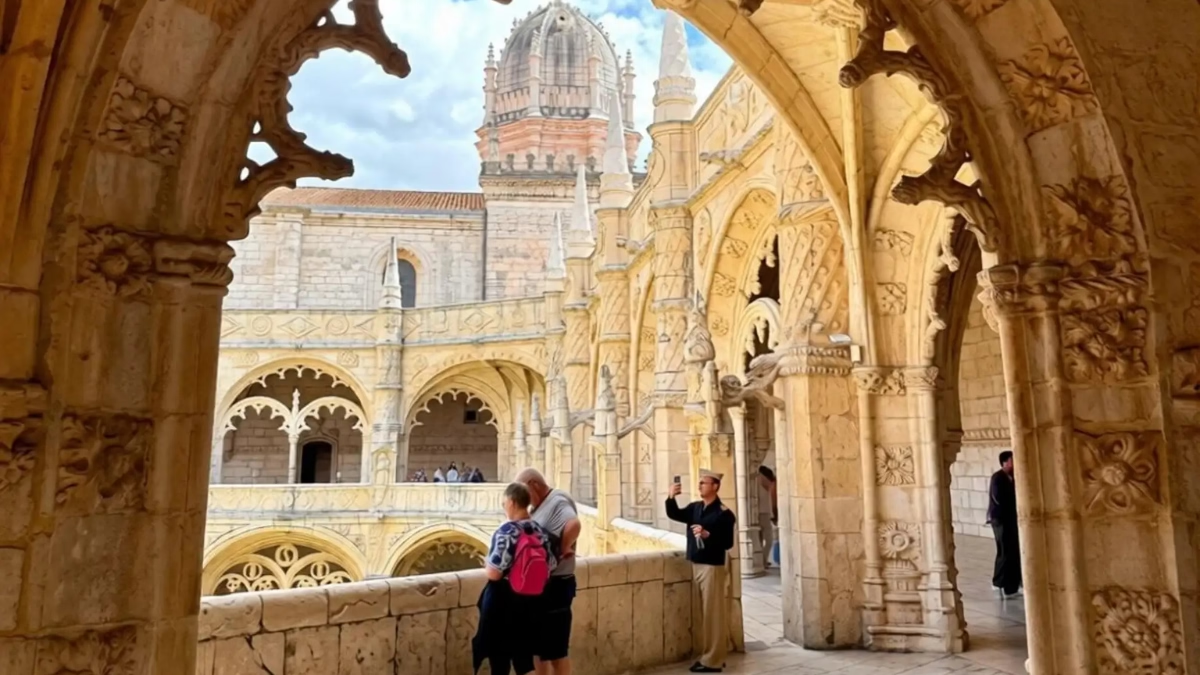
The best photo spots at Jerónimos Monastery are the long south façade and carved South Portal (best in morning light), the two-story cloister arcades and courtyard, close-up Manueline carvings of ropes and armillary spheres, the church nave and vaulting, and the wide view across the gardens and fountain in Praça do Império. Arrive at opening for the cleanest shots and softest light, and be mindful of tripod, flash and quiet-hours restrictions inside.
Jerónimos rewards photographers at almost every turn, from the honey-colored stone of the south façade to the intricate carving inside the cloister. But timing and angle make a real difference here — the same courtyard that looks flat and crowded at midday can look extraordinary an hour after opening.
This guide walks through the monastery’s best photo spots, the light and time of day that suit each one, and a few practical notes on crowds, tripods and respecting the working church.
The South Façade and Portal
The long south façade, with its elaborately carved South Portal, faces the morning sun and photographs best from soon after sunrise into mid-morning, before the light gets flat and harsh overhead. Stand well back across the road or garden edge to fit the whole façade, or move in close for the carved figures around the portal.
The south façade is the monastery’s most photographed exterior wall — a long run of honey-toned limestone punctuated by pinnacles, buttresses and the ornate South Portal, crowded with carved saints and royal figures. Because it faces roughly south, it catches direct sun in the morning, when the low angle picks out the depth of the carving in a way that flat midday light cannot. By early afternoon in summer the sun is high and harsh, and the façade can look washed out in photos.
For a full-façade shot, back up as far as the road and garden allow and use a moderate wide angle; for the portal itself, get close enough to isolate the tympanum and side figures, since the deepest carving reads best at an angle rather than straight on.
The Cloister: Symmetry and the Courtyard
The two-story cloister is the monastery’s photographic highlight — a square of arcades with different tracery on each level, framing a quiet courtyard. Shoot the symmetrical arcade corridors down their length for a classic vanishing-point shot, and use the corner arches to frame the courtyard fountain and garden beyond.
If you photograph only one thing inside Jerónimos, make it the cloister. The two levels of arcades — heavier ground-floor arches below, more delicate tracery above — wrap a square courtyard of clipped garden and a central fountain, and the repetition of matching bays makes for some of the most satisfying symmetry in the building. Walking one of the ground-floor corridors and shooting straight down its length gives a strong vanishing-point composition; standing in a corner and shooting diagonally across the courtyard captures both levels of arcade at once.
Note that some cloister bays have been heavily restored over the centuries, so stonework color and detail vary slightly from bay to bay — part of the building’s honest history rather than a flaw to avoid.
Manueline Carving Details
Jerónimos is full of close-up subjects in the Manueline style — twisted stone ropes, armillary spheres, coral and shell motifs, and knotted vegetal carving around doorways, columns and window frames. A short zoom or macro-style crop works better than a wide shot for these, since the detail is what makes them interesting.
Beyond the big architectural views, Jerónimos is a catalog of Manueline stonework worth photographing up close: carved ropes twisting around column shafts, armillary spheres (the navigational instrument that became a symbol of Manuel I), and maritime motifs like shells, coral and knotted cordage that reference the spice-trade wealth that funded the building. These details reward slowing down — walk the cloister arcades and the portal area looking for individual carvings rather than trying to capture everything in one frame, and get close enough that the relief and shadow of the stonework actually reads in the photo.
The Church Nave and Vaulting
Inside the church of Santa Maria de Belém, the nave’s slender palm-tree columns and star-ribbed vaulting are best photographed looking straight up or straight down the aisle, using the available window light rather than flash. Keep visits quiet and be ready to pause if a service is underway.
The church nave is a different kind of photo subject — tall, relatively open, and lit mostly by natural light through high windows rather than the raking sun that suits the exterior. The slim columns rising into star-pattern vaulting are dramatic shot straight up, and the long view down the nave toward the altar captures the scale of the space. Because this is a working church with its own shorter opening hours and occasional services, keep phones on silent, avoid flash, and be ready to step back respectfully if Mass or another service is in progress.
Praça do Império: The Classic Wide Shot
The gardens and fountain of Praça do Império, directly in front of the monastery, give the classic wide establishing shot — the full length of the façade reflected in the water or framed by clipped hedges. Shoot from the far side of the gardens in the morning or late afternoon for the most flattering angle and softest light.
For the single photo that shows the whole building, cross the road to Praça do Império, the formal garden and fountain square facing the monastery. From the far edge of the gardens you can fit the entire south façade in frame, often with the fountain or reflecting pools in the foreground. This is also a good spot to gauge how busy the entrance queue is before you commit to a time slot, since the whole plaza is visible from here.
Best Time of Day for Photos
Morning, soon after the 9:30 AM opening, gives the softest light on the south façade and the smallest crowds inside the cloister. Midday sun is harsh and flattens detail on the exterior, while late afternoon can work for the gardens but puts the façade partly in shadow.
Light and crowds both favor the morning at Jerónimos. The façade and South Portal catch a flattering low sun shortly after opening, and the cloister is at its quietest in the first hour or so, before tour groups build through the late morning. Midday sun tends to bleach out the carved detail on the exterior and creates harsh shadows in the courtyard. By late afternoon the façade falls into its own shadow, though the gardens at Praça do Império can still work well with the sun behind you. If your schedule allows it, our guide to the best time to visit Jerónimos breaks down the quietest days and hours in more detail.
Crowds, Tripods and Being Respectful
Arrive early for a clean shot of the cloister before tour groups fill it, and expect that tripods and flash may be restricted or discouraged inside to protect the stonework and other visitors — confirm current rules with staff at the entrance. Move quickly through the busiest pinch points, like the cloister corners, so other visitors can pass.
Jerónimos is a working monument and, in the church, a working place of worship, so a few courtesies go a long way. Full-size tripods are commonly restricted or simply impractical in the busier galleries, and flash photography is generally best avoided both for conservation reasons and out of consideration for other visitors — check with staff at the entrance for the current policy on the day, since rules can be adjusted seasonally. Photographing quickly and stepping aside afterward keeps narrow arcade corners and doorways moving for everyone else, and it’s worth planning enough time in the visit itself rather than treating photography as an afterthought; see our guide on how long to spend at Jerónimos for a realistic pace.
Phone vs Wide-Angle Lens
A phone camera handles most of Jerónimos well, especially with its default wide lens for the cloister and façade, but a dedicated wide-angle lens helps in the tightest corners and for the full nave interior. Either way, turn off flash indoors and use panorama or wide mode for the widest arcade views.
Modern phone cameras cover most of what you’ll want at Jerónimos — the default wide lens is usually enough for the cloister arcades, the façade from across the garden, and detail shots of carving. A separate wide-angle or ultra-wide lens becomes useful mainly in tight spots, such as capturing the full nave interior or a full arcade bay from close range where you can’t back up any farther. Whatever you’re shooting with, plan on a pre-booked entrance ticket for an early slot, since the queue-free morning window is also the best light of the day.
Frequently Asked Questions
What is the best time of day to photograph Jerónimos Monastery?
Morning, shortly after the 9:30 AM opening, is best. The south façade catches soft, low light and the cloister is at its quietest before tour groups arrive later in the morning. Midday sun tends to flatten detail on the exterior stonework.
Can I use a tripod inside the monastery?
Tripods are commonly restricted or impractical in the busier galleries, partly to protect the stonework and partly out of consideration for other visitors in narrow spaces. Policies can vary by season, so confirm with staff at the entrance on the day of your visit.
Is flash photography allowed inside Jerónimos?
Flash is generally best avoided indoors, both for conservation reasons and out of respect for other visitors, and it rarely improves photos of the carved stonework anyway. Confirm current rules with staff on site, since specific restrictions can change.
Where is the best spot for a photo of the whole building?
The gardens and fountain of Praça do Império, directly across from the monastery, give the clearest wide shot of the full south façade. Shooting from the far edge of the gardens in the morning or late afternoon gives the most flattering light.
What is the most photogenic part of the interior?
The two-story cloister is generally considered the highlight, with its symmetrical arcades, varied stone tracery and central courtyard. The church nave, with its palm-column vaulting, is the other standout interior subject.
Can I photograph inside the church?
Yes, the church of Santa Maria de Belém can be photographed, but it is a working place of worship with its own shorter hours, and services do take place. Keep phones silent, skip the flash, and be ready to pause respectfully if Mass is underway.
Do I need a wide-angle lens?
Not necessarily — a phone’s default wide lens covers most shots, including the cloister and façade. A dedicated wide-angle lens mainly helps in the tightest interior corners or for fitting the full nave in one frame.
How can I avoid crowds in my photos?
Arrive as close to opening as possible, since the cloister fills up with tour groups through the late morning and stays busy into the afternoon in high season. A pre-booked timed-entry ticket also helps you get in right at opening rather than waiting in a queue first.
