
Best Time to Visit Jerónimos Monastery: Beating the Crowds
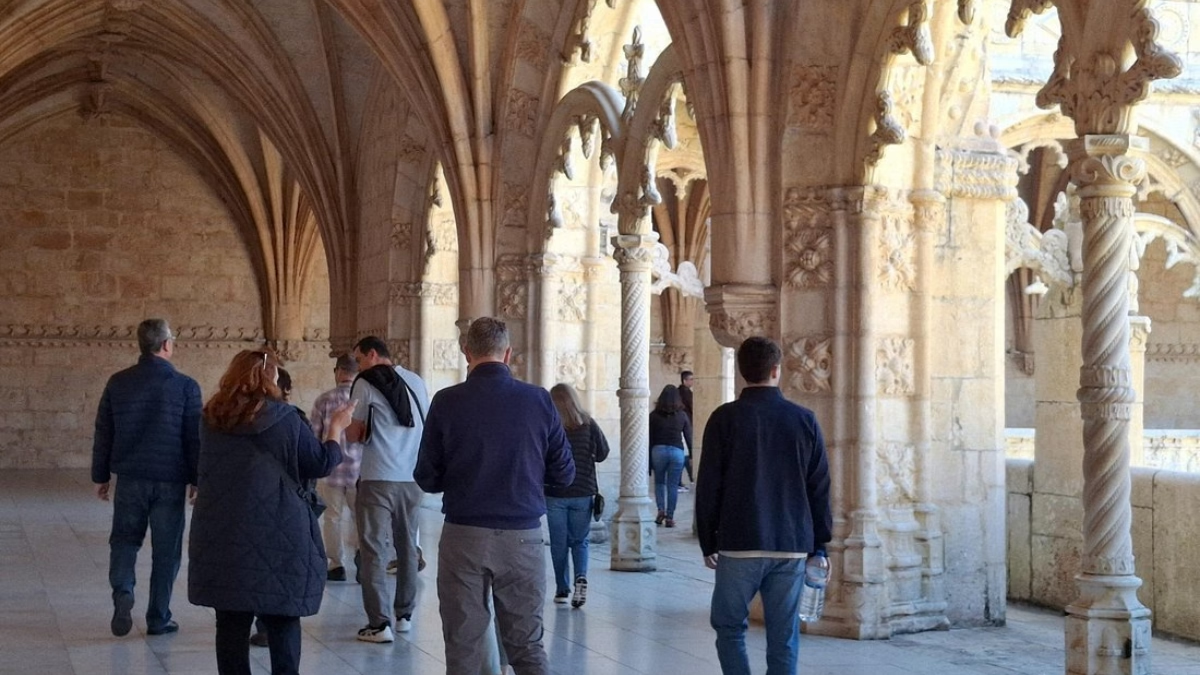
The best time to visit Jerónimos Monastery is right at the 9:30 AM opening or in the last hour or two before closing, on a weekday rather than a weekend. Shoulder-season months (April–May and September–October) bring milder weather and thinner crowds than summer, when on-the-day lines can top an hour. A pre-booked timed ticket removes most of the guesswork, whatever day or season you choose.
Jerónimos Monastery is Lisbon’s single most-visited monument, and its popularity shows up as a queue. The good news is that the crowd at Belém follows a fairly predictable rhythm — by hour, by day of the week, and by season — so a little timing goes a long way toward a calmer visit.
This guide walks through when to go, which days to avoid, and how a timed ticket changes the equation, so you can plan around the crowds rather than through them.
Best Time of Day: Opening Bell or Late Afternoon
The two quietest windows are right at the 9:30 AM opening, before tour groups arrive, and the last hour or two before closing, once day-trippers have moved on. The stretch from roughly late morning through mid-afternoon is the busiest part of the day.
The monastery’s cloisters open at 9:30 AM, and the first 30–45 minutes after the doors open are consistently the calmest of the day. Arrive a little before opening, and you can often walk into the cloisters with only a handful of other visitors around, giving you space to actually look at the carving rather than shuffle past it. For the exact seasonal closing times and last-entry cutoff, see our guide to Jerónimos Monastery opening hours.
The other calm window is late in the day. As closing approaches, tour buses have generally moved on to their next stop and the on-the-day queue thins out. The trade-off is that staff begin ushering visitors along as closing nears, so this slot suits a shorter, more focused visit rather than a leisurely one — pair it with our notes on how long to spend at Jerónimos Monastery to judge whether you’ll have enough time.
Between those two windows — roughly 11:00 AM to 3:00 PM — is when Belém is busiest. This is when independent travelers, organized tours, and cruise excursions overlap, and it’s the stretch to avoid if you have any flexibility in your schedule.
Best Days: Skip Weekends and the Resident-Free Sundays
Weekdays are calmer than weekends at Jerónimos, and Sundays are busier than they might look on paper because Portuguese residents get free entry then, drawing local visitors on top of the usual tourist traffic. The monastery is closed every Monday, so plan for Tuesday through Sunday.
Weekends bring out more leisure visitors, both local and international, so Saturday and Sunday tend to run busier than a typical Tuesday or Wednesday. Sunday carries an extra factor: it’s one of the days Portuguese residents can enter free (along with public holidays), which adds a wave of local visitors to the usual international crowd. It’s a good deal if you’re a resident, but as a visiting tourist it’s worth knowing that Sunday isn’t the quiet day it might seem.
Remember, too, that the monastery is closed on Mondays, along with a short list of public holidays — so a “quiet weekday” strategy really means Tuesday through Friday. If your trip allows it, aim for one of those four days, and check the current holiday closure dates before you finalize your itinerary.
Best Season: Shoulder Months Over High Summer
April–May and September–October are the best seasons to visit — mild weather without the peak-summer crowds. Summer (June–August) is busiest, with on-the-day lines that can run one to two hours. Winter (November–March) is quietest overall, though days are shorter and the church may adjust its hours.
Lisbon’s shoulder seasons hit a sweet spot: temperatures are comfortable for walking around Belém, and the crowds haven’t yet reached their summer peak. April, May, September, and October consistently see shorter lines and a more relaxed atmosphere in the cloisters than the height of summer.
Summer is the monastery’s busiest stretch by a wide margin. School holidays across Europe and North America, plus Lisbon’s own tourism high season, combine to push on-the-day queues past an hour and sometimes closer to two, especially at midday. If you’re visiting between June and August, a pre-booked ticket stops being a nice-to-have and becomes close to essential.
Winter brings the thinnest crowds of the year, along with a genuine chance of walking straight into the cloisters with little to no wait. The trade-offs are shorter daylight hours and a slightly reduced closing time (the cloisters run to about 5:30 PM rather than the summer’s 6:00 PM), plus the usual chance of rain. Confirm the exact season-by-season closing time before you go, since published hours can shift slightly by source.
How Timed Tickets Change the Calculus
A pre-booked timed ticket lets you walk past the on-the-day ticket line and enter at your chosen slot, which matters most in summer and around midday, when that line can run over an hour. It’s less critical in winter or at the very first morning slots, but it removes the risk of a sold-out day either way.
Jerónimos sells cloister admission by timed entry, and the on-the-day line for buying a ticket on arrival is separate from — and usually longer than — the line for pre-booked, timed-entry holders. In summer, or during the midday crowd surge, that difference can be the gap between walking straight in and standing outside for an hour or more.
Booking ahead does more than save time in line: it also guarantees you a spot on a given day, since popular time slots can sell out during peak season. If your travel dates are fixed, locking in a slot with the Jerónimos Entrance Ticket removes one more variable from the trip. In the quieter months, or first thing in the morning, the gap between booked and on-the-day entry narrows, but it rarely disappears entirely.
Watch for Cruise-Ship and Tour-Bus Surges
Belém sees sudden crowd surges when cruise ships dock in Lisbon and their shore excursions arrive by the busload, typically around mid-morning to midday. These surges can make an otherwise quiet weekday or off-season day feel unexpectedly busy for an hour or two.
Even outside peak season, Jerónimos can see a sharp, short-lived spike in foot traffic when a cruise ship is in port. Shore excursions tend to arrive in a cluster, often mid-morning through midday, filling the cloisters and church with tour groups moving on a schedule. The surge usually passes within an hour or two, so if you walk up to a suddenly crowded courtyard, it’s often worth stepping away to a nearby garden or café and returning a little later.
Regular tour buses add a similar, if smaller, effect throughout the day, particularly around midday when several itineraries converge on Belém at once. Combining an early or late visit with a pre-booked ticket is the most reliable way to sidestep both the daily crowd curve and these one-off surges.
Frequently Asked Questions
What is the single best time to visit Jerónimos Monastery?
Right at the 9:30 AM opening is generally the best single window, since it’s before most tour groups and day-trippers arrive. The last hour or two before closing is a close second. The busiest stretch to avoid is roughly late morning through mid-afternoon.
Is it better to visit Jerónimos Monastery on a weekday or weekend?
Weekdays are calmer overall. Weekends draw more leisure visitors, and Sundays are busier than they might seem because Portuguese residents get free entry then. Tuesday through Friday tend to be the quietest options, since the monastery is closed Mondays.
What’s the best season to visit Jerónimos Monastery?
April–May and September–October offer the best balance of mild weather and manageable crowds. Summer (June–August) is the busiest and hottest season, with on-the-day lines that can run one to two hours. Winter is quietest but has shorter days and slightly reduced hours.
Do timed tickets really make a difference?
Yes, especially in summer or around midday. A pre-booked timed ticket lets you skip the on-the-day purchase line, which can exceed an hour in high season, and it guarantees you a spot when popular slots sell out. The benefit is smaller in winter or at the very first morning slots.
Why is Jerónimos Monastery so crowded on Sundays?
Sundays combine the usual weekend leisure crowd with free entry for Portuguese residents, which draws local visitors on top of the international tourist traffic. It’s a good day to visit if you qualify for free entry, but not the quiet day it might appear to be.
Do cruise ships really affect the crowds at Jerónimos?
Yes. When a cruise ship is docked in Lisbon, its shore excursions often arrive at Belém in a cluster, usually mid-morning to midday, creating a short but noticeable surge in the cloisters and church. The crowd from a single ship’s excursions typically clears within an hour or two.
Should I visit the church or the cloisters first to beat the crowds?
Whichever has the shorter line when you arrive. The church and cloisters have separate entrances and queues, so checking both on arrival and starting with the quicker one can save time, particularly in the late-morning to midday crowd surge.
Is early morning or late afternoon better if I only have one shot?
Early morning is usually the safer choice, since it comes before both the daily crowd buildup and any cruise-ship surges, and it leaves the rest of your day free. Late afternoon works well too, but visits closer to closing time are more rushed.
