
The Jerónimos Refectory & Chapter House: Hidden Highlights
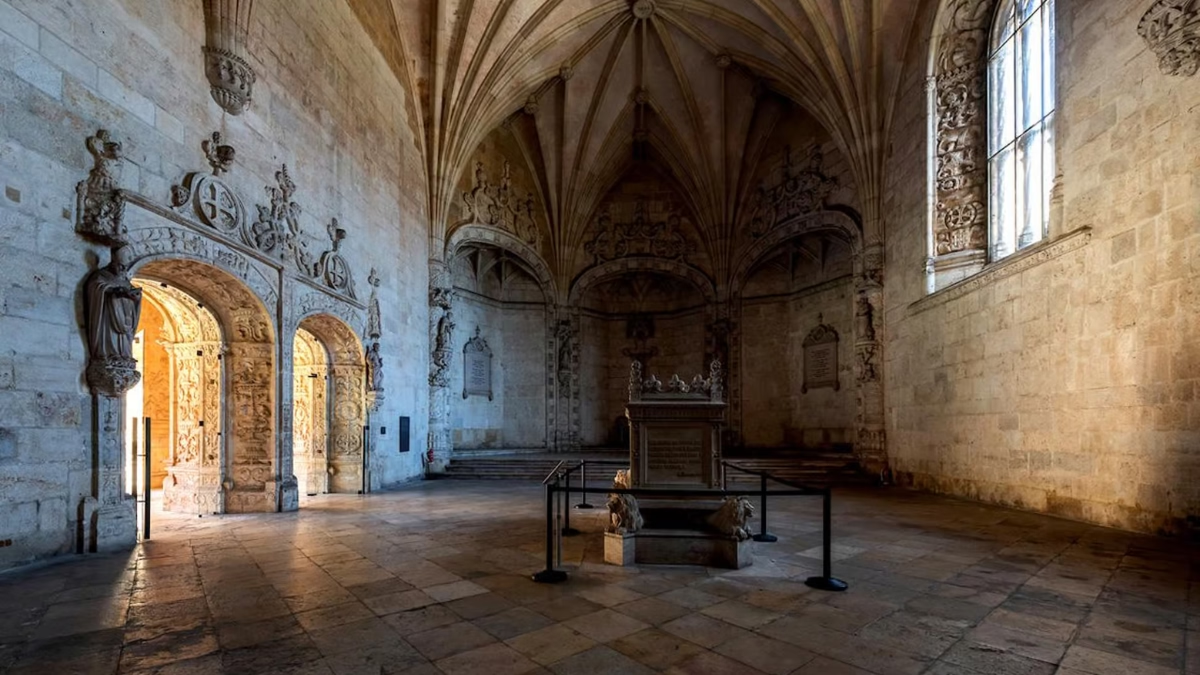
Off the ticketed cloisters at Jerónimos Monastery sit two rooms most visitors rush past: the Refectory, the monks’ former dining hall, with ropelike Manueline vaulting and walls lined in 18th-century blue-and-white azulejo tile panels, and the Chapter House, which holds the tomb of the 19th-century historian Alexandre Herculano. Both are a few steps off the cloister walkway and are included in the standard cloister ticket — no extra charge, no extra line.
Most visitors to Jerónimos spend their time circling the two-story cloister and photographing its carved arches, then head for the exit without ever stepping into the rooms that open off it. That’s understandable — the cloister is the headline act — but the Refectory and Chapter House reward the few extra minutes they take, and on a crowded day they’re often the quietest corners of the entire complex.
Neither room requires a separate ticket or a detour outside the monastery. They sit just off the cloisters themselves, and seeing them only adds a short loop to a visit you’re already making.
Where They Are, Relative to the Cloister
The Refectory and Chapter House both open directly off the ground floor of the cloister walkway, close to where visitors enter the cloistered area. Signage inside the monastery points the way, but because both rooms are set back from the main courtyard, it’s easy to walk the full loop of the cloister and miss them entirely. If you’re following a self-guided route, plan to peel off the cloister path at least once to step into each room rather than saving them for “on the way out.”
The Refectory: The Monks’ Dining Hall
The Refectory was the dining hall of the Hieronymite monks who once lived at Jerónimos. Its ceiling is carved with the same ropelike, knotted Manueline vaulting found elsewhere in the monastery, and its walls are covered in 18th-century blue-and-white azulejo tile panels added long after the building’s original construction.
The Refectory is a long, hall-like room that once served the community of monks who lived and worshipped at the monastery for centuries. Its vaulted ceiling continues the same carved, rope-like stonework that gives the cloister its distinctive texture — twisted cords, knots, and maritime motifs echoing the wealth of the spice trade that funded the monastery’s construction. It’s a smaller, more intimate example of the Manueline architecture that defines Jerónimos, worth comparing side by side with the grander vaulting in the cloister and church.
What sets the Refectory apart, though, is its walls. Long after the monastery was built, the room was lined floor to ceiling with blue-and-white azulejo tile panels, added in the 18th century in the classic Portuguese decorative style. One panel illustrates a biblical miracle involving the multiplication of loaves and fishes — a fitting theme for a room built for feeding a religious community. The contrast between the earlier stone carving overhead and the later tilework on the walls is part of what makes the room worth a slow look rather than a quick glance.
The Chapter House and Alexandre Herculano’s Tomb
The Chapter House was traditionally where the monastic community held its meetings. Today it holds the tomb of Alexandre Herculano (1810–1877), the Portuguese historian and writer whose remains were transferred here in the 20th century in recognition of his standing as one of the country’s foremost historical scholars.
The Chapter House served a different purpose from the Refectory: it was where the monks convened as a community to conduct the daily business of monastic life. It’s a smaller, quieter room, and today its best-known feature is a single tomb rather than any elaborate decoration — that of Alexandre Herculano, the 19th-century historian, novelist, and journalist regarded as one of the founders of Portuguese Romanticism and modern Portuguese historiography. His remains were later moved to the Chapter House, placing a major figure of 19th-century Portuguese letters inside a building erected three centuries earlier under Manuel I.
It’s a modest counterpoint to the elaborate tombs of Vasco da Gama and Luís de Camões flanking the church entrance. If you want the fuller picture of who is buried where across the monastery, our guide to the tombs at Jerónimos covers the navigators, kings, and writers laid to rest here.
Why They’re Worth Slowing Down For
Both rooms offer something the main cloister, for all its grandeur, doesn’t: relative solitude. Tour groups tend to cluster in the courtyard and church, and the Refectory and Chapter House rarely see the same crush. They also add texture to the story the monastery tells. The cloister shows off the wealth and ambition of the Age of Discoveries; the Refectory shows the more everyday, communal side of monastic life, layered later with a very different decorative tradition in its azulejos; and the Chapter House shows how the building’s meaning kept evolving long after the monks themselves were gone, right up to a 19th-century historian’s tomb being placed within its walls.
Included in Your Cloister Ticket
Neither room requires a separate ticket, reservation, or additional fee. Both are part of the standard cloister circuit, covered by the same entrance ticket that gets you into the two-story courtyard, upper choir, and other ticketed areas. The only real cost is time — a few extra minutes worked into your cloister visit, ideally without rushing toward the last-entry cutoff.
Frequently Asked Questions
What is the Refectory at Jerónimos Monastery?
The Refectory is the former dining hall used by the Hieronymite monks who lived at the monastery. It features carved Manueline vaulting on the ceiling and walls covered in 18th-century blue-and-white azulejo tile panels, added long after the room was originally built.
What is the Chapter House at Jerónimos Monastery?
The Chapter House was traditionally the meeting room where the monastic community conducted its business. Today it is best known as the resting place of Alexandre Herculano, the 19th-century Portuguese historian and writer.
Who is buried in the Chapter House?
The Chapter House holds the tomb of Alexandre Herculano (1810–1877), a historian, novelist, and key figure in Portuguese Romanticism. His remains were moved here in recognition of his contribution to Portuguese historical writing.
Are the Refectory and Chapter House included in the cloister ticket?
Yes. Both rooms are part of the standard cloister visit and require no separate ticket or additional fee beyond the regular monastery entrance ticket.
Where are the Refectory and Chapter House located?
Both open directly off the ground-floor cloister walkway, near the entrance to the cloistered area. They’re easy to miss if you only walk the outer loop of the cloister, so look for the signed doorways leading off the courtyard.
What are the azulejo tiles in the Refectory?
They are blue-and-white ceramic tile panels added in the 18th century, well after the Refectory’s original Manueline construction. One panel depicts a biblical scene involving the multiplication of loaves and fishes, a fitting subject for a former dining hall.
Are the Refectory and Chapter House crowded?
Generally, no. Most visitors and tour groups concentrate in the main cloister courtyard and the church, so these adjoining rooms tend to be noticeably quieter, even during busy periods.
How much time should I set aside for these two rooms?
Ten to fifteen minutes is usually enough to appreciate both rooms without rushing, on top of the hour or more most visitors spend on the cloister and church combined.
