
Jerónimos Monastery Gardens & Exterior: What to See Outside
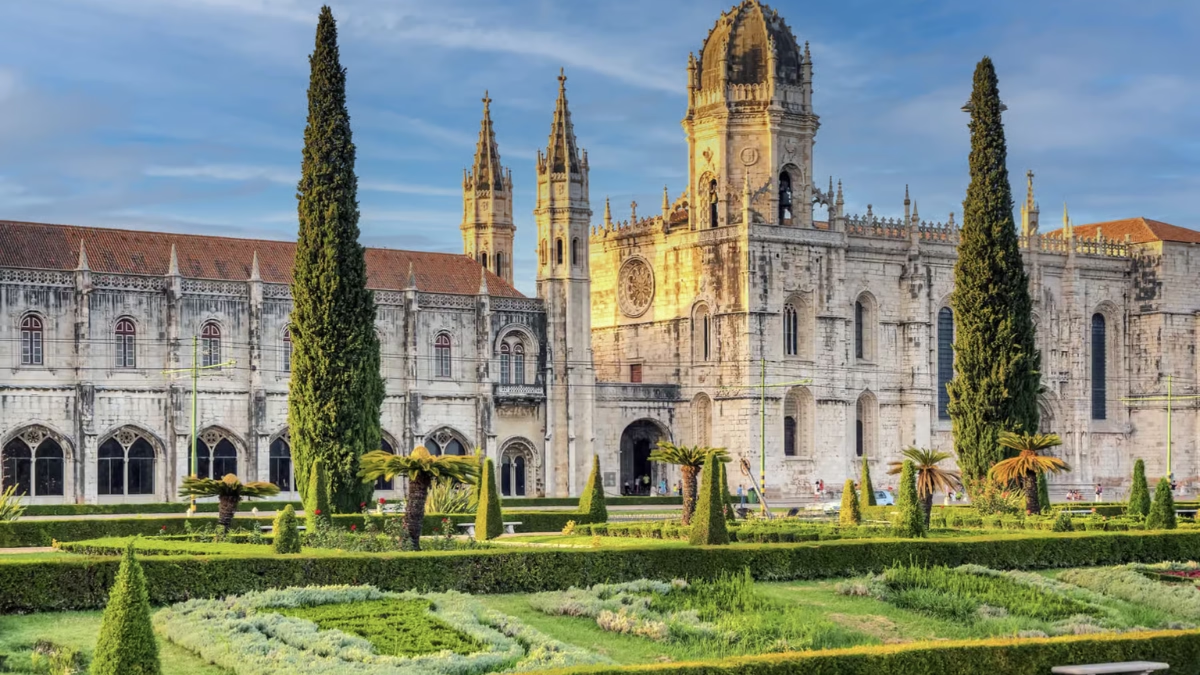
The Jardim da Praça do Império in front of Jerónimos Monastery — its clipped box hedges, large central fountain, and open lawns — is free, open to the public at any hour, and gives the best full view of the monastery’s roughly 300-meter Manueline façade. It’s also the natural link between the monastery and the riverside walk toward the Monument to the Discoveries and Belém Tower. You don’t need a ticket, or even a plan to go inside, to enjoy this part of a Belém visit.
Not everything worth seeing at Jerónimos is behind a ticket gate. The gardens and exterior are free, always accessible, and arguably give you the best sense of the building’s sheer scale — something the ticketed cloisters, seen from inside, don’t fully convey. This is also where most people take their first and last photos of the monastery.
This guide covers the Jardim da Praça do Império, the long west façade, the riverside setting toward Belém Tower, and the practical details of using this space as a rest stop before or after your visit.
The Jardim da Praça do Império
The Jardim da Praça do Império is the formal garden directly in front of Jerónimos Monastery, laid out with geometric box hedges, lawns, and a large central fountain that is illuminated on some evenings. It’s a public park with no entrance fee and no set hours, sitting between the monastery and the road toward the river.
The garden is formal rather than wild — clipped box hedges arranged in a symmetrical pattern around a wide central fountain, with lawns framing the monastery’s long façade on one side and opening toward the river on the other. It was laid out in the 1940s as part of a wider redevelopment of the Belém waterfront, so it’s newer than the monastery itself by four centuries, but it now reads as an essential part of the setting. On some evenings the fountain is lit, and the whole square makes a pleasant stop even after the cloisters have closed for the day.
Because it’s an open public square rather than a monument, there’s no ticket, no opening hours to work around, and no queue. You can walk through at 7 AM or 10 PM. It also means the garden is one of the few parts of a Jerónimos visit that works even on a Monday, when the cloisters and church are closed.
The 300-Meter Façade
The west façade of Jerónimos Monastery runs roughly 300 meters along the Praça do Império, making it one of the longest monastic façades in Europe. Its full length and Manueline stonework are best appreciated from the garden across the square, not from close up at the entrance.
Up close, at the ticket line or the church door, you only see a slice of the building. Step back into the garden and the façade’s real scale becomes clear — a long run of carved limestone incorporating the church, the former refectory and dormitory wings, and what are now the Maritime Museum and National Archaeology Museum at the west end. The ornamentation is densest around the church’s South Portal, where intricate carving frames the entrance, then thins out along the plainer wings further along. Walking the full length of the square, from one end of the building to the other, is the easiest way to grasp why Jerónimos took roughly a century to complete.
Riverside Setting: Toward the Discoveries and Belém Tower
From the gardens, a short walk south crosses the road and rail line to the Tagus riverside, where the Monument to the Discoveries stands, and continues on to Belém Tower about 15 to 20 minutes further west on foot. This waterfront stretch is what originally connected the monastery to the river and the age of Portuguese maritime exploration it commemorates.
Jerónimos was built to give thanks for, and to bless, the voyages that left from this stretch of the Tagus, and the riverside location is part of the story, not just scenery. From the garden, pedestrian crossings lead to the waterfront promenade, where the Monument to the Discoveries rises in a sail-like column of stone figures. From there, a flat riverside path continues west to Belém Tower, passing gardens, the Belém cultural center, and river views along the way. It’s an easy, mostly flat walk that ties the monastery, the monument, and the tower into one continuous visit — see our guide on what to do near Jerónimos for a full half-day route.
Best Spots to Photograph the Exterior
The clearest photos of the full façade come from the garden’s central path or fountain area, which gives enough distance to fit the whole building in frame. Morning light works best, since the façade faces roughly east-southeast and can fall into shadow by late afternoon.
For a shot of the whole monastery, you need distance — something the ticket line and church doorway don’t give you. Stand near the fountain or along the garden’s central path and the entire west front, from the museum wings to the church towers, fits into a single wide frame. Morning is the more forgiving time to shoot, since the façade catches direct light before midday; by late afternoon the building can sit in its own shadow. For carving detail rather than the whole building, the South Portal and the church’s main doorway reward a closer look and a longer lens. Our dedicated guide to photo spots at Jerónimos covers angles for the cloisters and interior as well.
Picnic and Rest Options
The garden’s lawns and shaded benches make a reasonable place for a quick rest or a light snack, though there are no picnic tables or facilities on site. Cafés and pastelarias, including the original Pastéis de Belém, are a short walk away for anything more substantial.
There’s no formal picnic area, but the lawns and benches around the fountain are open for anyone who wants to sit down, and shade from the trees along the garden’s edges helps on hot afternoons. It’s a natural place to regroup after the cloisters — queues, ticket checks, and a lot of stone stairs make a short break welcome. For food, the garden itself has nothing beyond the occasional kiosk, so most visitors walk a few minutes to the cafés and bakeries around Belém, including the original Pastéis de Belém shop for the neighborhood’s namesake custard tart.
Practical Notes
The gardens and exterior are free and unticketed at any time of day. They’re an easy stop before your entry slot at the cloisters, a place to wait out a queue in the shade, or a way to close out a visit once the ticketed areas close for the day. Because there’s no gate here, this is also the one part of Jerónimos that stays open on Mondays and public holidays, when everything else at the site is shut.
Frequently Asked Questions
Is the Jerónimos Monastery garden free to visit?
Yes. The Jardim da Praça do Império in front of the monastery is a public square with no entrance fee, no ticket check, and no fixed opening hours. It’s open to walk through at any time, unlike the ticketed cloisters and the church, both of which keep set hours.
Can I visit the gardens if the monastery is closed on Monday?
Yes. The gardens and exterior are open every day, including Mondays, when both the cloisters and the church are closed. It’s a good option if your only free day in Belém happens to fall on a Monday.
What’s the best time to photograph the monastery’s exterior?
Morning light works best, since the façade faces roughly east-southeast and can be in shadow by late afternoon. Shoot from the garden’s fountain area or central path for the whole building in frame, or move closer to the South Portal for carving detail.
How long is the monastery’s façade?
The west façade runs roughly 300 meters along Praça do Império, encompassing the church, former monastic wings, and the museum sections at either end. It’s easiest to appreciate from across the square in the garden rather than up close.
Is there anywhere to eat or sit in the gardens?
There are lawns and benches for a rest, but no cafés, picnic tables, or food stalls within the garden itself. For food, walk a few minutes to the cafés and bakeries around Belém, including the original Pastéis de Belém.
How do the gardens connect to Belém Tower and the Monument to the Discoveries?
A short walk south from the gardens crosses to the Tagus riverside promenade, where the Monument to the Discoveries stands. Continuing west along the flat riverside path leads to Belém Tower, roughly 15 to 20 minutes further on foot.
Do I need to book anything to see the gardens and exterior?
No. Unlike the cloisters, which require a timed-entry ticket, the gardens and exterior are open public space with no booking, no ticket, and no capacity limit.
Is the fountain lit up at night?
The central fountain in the Jardim da Praça do Império is illuminated on some evenings, though not on a fixed nightly schedule. It’s worth a look if you’re in Belém after dark, even outside the monastery’s own opening hours.
