
Belém Lisbon Guide: Everything to See & Do Near Jerónimos
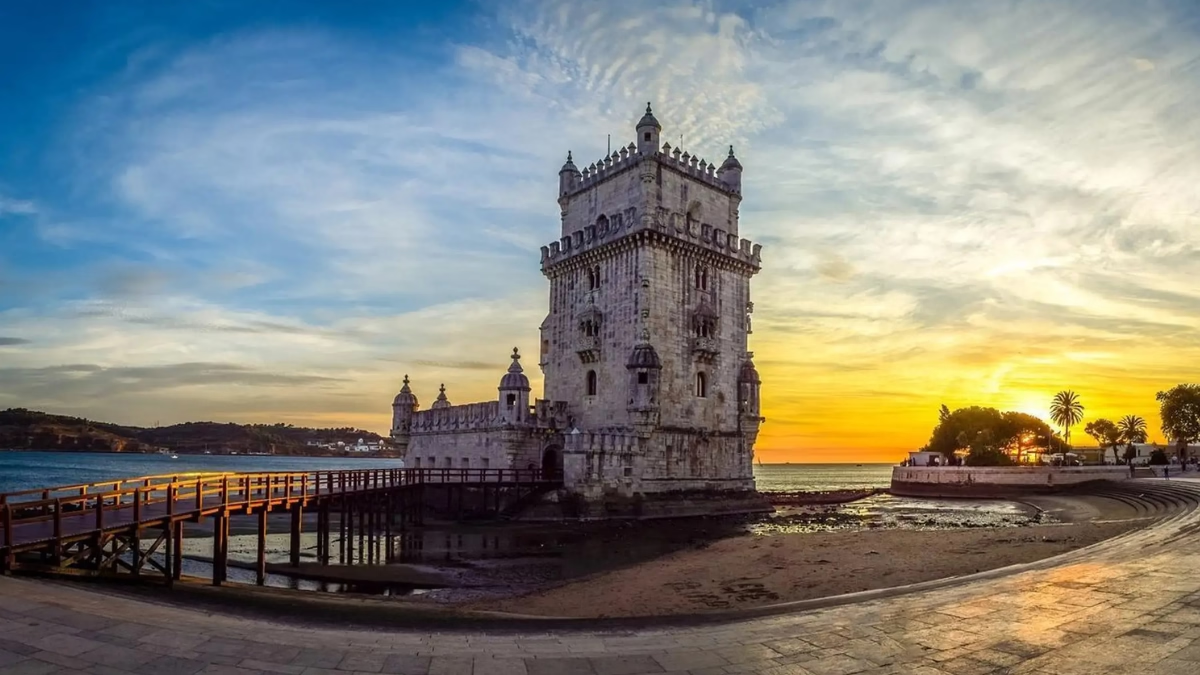
Belém is the riverside district west of central Lisbon where Portugal’s Age of Discovery ships once launched, and it now holds one of the densest clusters of monuments in the country. Jerónimos Monastery is the anchor, but Belém Tower, the Monument to the Discoveries, Pastéis de Belém, MAAT, the National Coach Museum, and several riverside gardens all sit within a short walk of each other. Plan on half a day for the highlights or a full day to cover the district properly.
Belém sits on the north bank of the Tagus, about 6 km west of central Lisbon, and it is where Portuguese ships departed for India, Brazil, and beyond during the Age of Discovery. That history is why the district holds two UNESCO World Heritage Sites within a few hundred meters of each other — Jerónimos Monastery and Belém Tower — plus a cluster of museums, gardens, and one very famous pastry shop, all funded and shaped by the wealth that discovery-era trade brought home.
This guide covers everything worth seeing in Belém beyond the monastery itself, how to get there, how much time to set aside, a suggested route, and where to eat — with Jerónimos as the natural starting point for a visit.
Why Belém Matters
Belém was the launch point of Portugal’s maritime empire — Vasco da Gama sailed from here in 1497 — and the wealth from that trade built Jerónimos Monastery and, later, Belém Tower to guard the river approach. Both are UNESCO World Heritage Sites, inscribed jointly in 1983, which is why the district feels denser with monuments than almost anywhere else in Lisbon.
Belém’s waterfront was the departure point for the voyages that opened sea routes to India and the Americas, and the spice trade that followed paid for Jerónimos Monastery, begun in 1501 under King Manuel I. The Manueline style that defines the monastery’s carved stonework — nautical ropes, coral, and armillary spheres worked into the architecture — appears again, in simpler form, at Belém Tower downriver. Together the two monuments tell the story of a small country that briefly ran a global trading network, and that history is what makes Belém worth a dedicated visit rather than a rushed stop.
The Key Sights
Jerónimos Monastery
The monastery is Belém’s anchor sight and, for most visitors, the reason to come to the district at all. The free church of Santa Maria de Belém holds the tombs of Vasco da Gama and the poet Luís de Camões, while the ticketed cloisters — a two-story carved courtyard that took the better part of a century to complete — are the architectural highlight. Budget an hour or more for the cloisters alone; our guide to the tombs of Vasco da Gama and Luís de Camões and the church of Santa Maria de Belém covers what to look for inside.
Belém Tower
A 10–15 minute walk (or a short tram ride) west along the riverfront brings you to Belém Tower, a fortified watchtower built in the early 1500s to guard the mouth of the Tagus. It’s smaller inside than photos suggest, and the narrow spiral stairways mean queues can move slowly at peak times, but the exterior carving and riverside setting make it worth the walk even if you skip the climb.
Padrão dos Descobrimentos (Monument to the Discoveries)
Standing on the riverbank between the monastery and the tower, this 1960 monument depicts Henry the Navigator and a procession of explorers, monarchs, and cartographers at the prow of a stylized ship. An elevator to the viewing platform gives one of the better views over Belém and the river, including the Vasco da Gama Bridge and the Tagus’s suspension-bridge look-alike, the 25 de Abril.
Pastéis de Belém
The original custard-tart bakery, operating since 1837, sits just across from the monastery and still bakes to a recipe the shop keeps secret. It’s often crowded, but the takeaway counter moves faster than the sit-down café, and a warm tart with cinnamon and powdered sugar is worth the short line.
MAAT (Museum of Art, Architecture and Technology)
A striking curved riverside building a short walk east of the tower, MAAT houses contemporary art and architecture exhibitions and doubles as a public riverside terrace even if you don’t go inside. It’s one of the newer additions to Belém’s museum row and a good contrast to the district’s older monuments.
National Coach Museum
One of the world’s largest collections of historic royal and state carriages, housed in a modern building near the monastery. It’s a quick, focused visit — often 30–45 minutes — and a good option if you have an extra hour after the monastery.
CCB / Berardo Collection
The Centro Cultural de Belém (CCB) is a large cultural complex hosting concerts, exhibitions, and the Berardo Collection, a modern and contemporary art museum with works by Picasso, Warhol, and Dalí among others. It sits between the monastery and Belém Tower, making it easy to fold into a riverside walk.
Maritime Museum and National Archaeology Museum
Both museums occupy wings of the monastery building itself, each on its own separate ticket from the cloisters. The Maritime Museum traces Portugal’s naval and exploration history with model ships and navigational instruments, while the National Archaeology Museum covers Portuguese prehistory through the Roman and Moorish periods. Neither requires much extra walking since they share the monastery’s footprint.
Riverside Gardens
The Jardim da Praça do Império, directly in front of the monastery, is a formal garden with a large fountain and clipped hedges — a good rest stop and photo spot. Further along the river, informal green spaces and promenades link the sights together, making most of Belém walkable without retracing your steps.
How Much Time to Allow
Allow at least half a day to see Jerónimos Monastery, Belém Tower, and the Monument to the Discoveries at an unhurried pace. A full day lets you add MAAT, the Coach Museum, CCB, and a proper stop at Pastéis de Belém without feeling rushed.
A half-day visit — roughly four hours — covers the monastery’s cloisters and church, a walk past the Monument to the Discoveries, a stop at Belém Tower, and a tart at Pastéis de Belém. A full day allows time for one or two of the museums as well, plus a slower lunch and a walk through the riverside gardens. Queues at both the monastery and the tower can add 30–60 minutes in high season, so build in slack if you’re visiting in summer. If you’d rather follow a timed itinerary than plan your own route, our half-day guide to what to do near Jerónimos lays one out stop by stop.
Suggested Route
- Start at Jerónimos Monastery in the morning, soon after opening, when the cloisters are quietest.
- Walk across to Pastéis de Belém for a tart before the lunchtime rush.
- Head to the riverfront and the Monument to the Discoveries, taking the elevator up for the view.
- Continue west along the river to Belém Tower.
- On the way back, stop at MAAT or the CCB/Berardo Collection, or the National Coach Museum, depending on how much time and energy remain.
This route keeps walking mostly along the river and avoids backtracking, though it can run in reverse just as easily.
Getting There
Belém sits about 6 km west of central Lisbon, and several options run directly into the district. Tram 15E runs from Praça da Figueira and Cais do Sodré and drops you within walking distance of the monastery. Buses 728, 714, and 727 also serve Belém from the city center, and the Cascais-line train stops at Belém station, a short walk from the sights. There is some parking near the river, though it fills quickly on weekends. Our full guide on how to get to Jerónimos Monastery covers routes, timing, and fares in detail.
Where to Eat
Beyond Pastéis de Belém, the streets around the monastery and along the riverfront hold a range of cafés and restaurants, from quick pastry counters to sit-down seafood spots overlooking the Tagus. The CCB complex also has a café with river views. Given the crowds around lunchtime, eating slightly earlier or later than the midday peak makes for a calmer meal.
Practical Tips: Crowds and Monday Closures
Several of Belém’s biggest sights — including Jerónimos Monastery and the National Coach Museum — close on Mondays, so avoid planning a full Belém day for that day of the week. Crowds peak at midday in high season; visiting soon after opening is the most reliable way to avoid the worst lines.
Belém’s museums don’t all follow the same schedule, but Mondays cluster more closures than any other day, including at the monastery itself — see our guide to Jerónimos Monastery’s opening hours for the full weekly and holiday schedule. If Monday is your only free day in Lisbon, you can still walk the riverfront, see the exteriors, and visit Belém Tower and the Monument to the Discoveries, but check individual museum schedules before counting on an indoor visit. For crowd levels generally, our guide to the best time to visit Jerónimos Monastery applies fairly well to the district as a whole, since the same tour buses and cruise-ship crowds that fill the monastery also fill Belém Tower and the tart shop.
Frequently Asked Questions
What is Belém known for?
Belém is the Lisbon district where ships launched during Portugal’s Age of Discovery, and it holds two UNESCO World Heritage Sites — Jerónimos Monastery and Belém Tower — along with the Monument to the Discoveries, several museums, and the original Pastéis de Belém bakery. It’s one of the most historically dense areas in the city.
How do I get from central Lisbon to Belém?
Tram 15E, buses 728, 714, and 727, and the Cascais-line train (to Belém station) all run from central Lisbon to Belém, a trip of roughly 20–30 minutes depending on your starting point. There is limited parking near the river if you’re driving.
How much time should I spend in Belém?
Plan on at least half a day for the monastery, Belém Tower, and the Monument to the Discoveries. A full day lets you add museums like MAAT, the National Coach Museum, or the CCB/Berardo Collection, plus a relaxed meal and a walk through the riverside gardens.
Is Jerónimos Monastery worth visiting if I only have time for one sight in Belém?
Yes. The monastery is the district’s architectural centerpiece and the reason many of Belém’s other monuments and museums exist in the first place, since the same maritime wealth funded much of the area’s later development. If you can only see one thing, make it the monastery’s cloisters.
What’s closed on Mondays in Belém?
Jerónimos Monastery and the National Coach Museum both close on Mondays, and other museums in the district have their own weekly closures that don’t always align. Check individual schedules if your visit falls on a Monday, and consider using that day for the outdoor sights instead — Belém Tower’s exterior, the Monument to the Discoveries, and the riverside gardens.
Can I walk between all the sights in Belém?
Yes. Jerónimos Monastery, Belém Tower, the Monument to the Discoveries, Pastéis de Belém, MAAT, and the CCB are all within about a 20-minute walk of each other along the riverfront, making a car or taxi unnecessary once you’ve arrived in the district.
Do I need to book tickets in advance for Belém’s sights?
Advance timed-entry tickets are strongly recommended for Jerónimos Monastery and Belém Tower in high season, when on-the-day queues can run over an hour. Most museums in the district don’t require advance booking, though it doesn’t hurt to check during major holidays.
Is Pastéis de Belém worth the wait?
Most visitors find it is, at least for one tart, though the takeaway counter moves considerably faster than the sit-down café if you’re short on time. Going slightly before or after the lunch rush also cuts the wait significantly.
